Pine-Belt Villas
Detached homes in l'Eliana and La Cañada with the floor area that lets the system stretch out.

Underfloor heating turns the largest surface in your home into its heat source: no radiators on the walls, no air blowing, just even warmth rising from the tiles — and in summer, the same loops can gently cool the house. It's the emitter aerotermia was born for. We design and install suelo radiante for villas, new builds and renovations across Valencia, with a fixed written quote and a 2-year workmanship warranty.
Suelo Radiante Refrescante
Spread a modest amount of warmth across eighty square metres of tile and the physics do the rest: even temperatures at ankle height, walls freed of radiators, and a heat pump producing gently warm water — its favourite job. That's why suelo radiante and aerotermia are quoted together so often: each makes the other better. We handle the whole build-up, from circuit design to the moment the manifold gauges settle, and connect it all to a properly sized heat pump under one written price.
Underfloor heating is unforgiving of shortcuts — once the screed is down, everything underneath it had better be right. Our process front-loads the checks so the pour happens exactly once.
We measure rooms, thresholds and existing build-ups, and calculate what each space needs.
Circuit lengths, manifold positions and system type — all priced in one written document.
Insulation boards or low-profile panels go down flat, taped and ready for pipe.
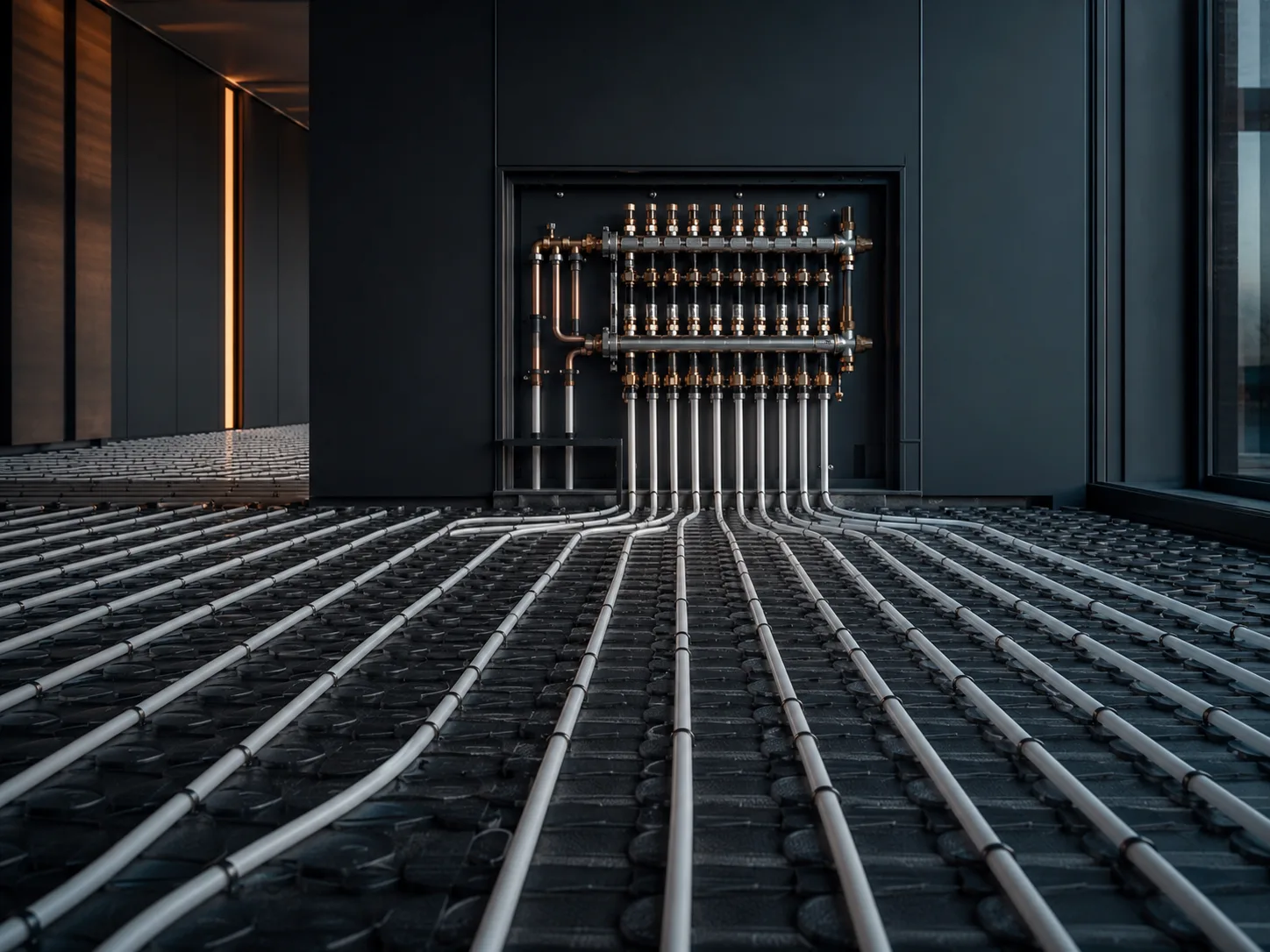
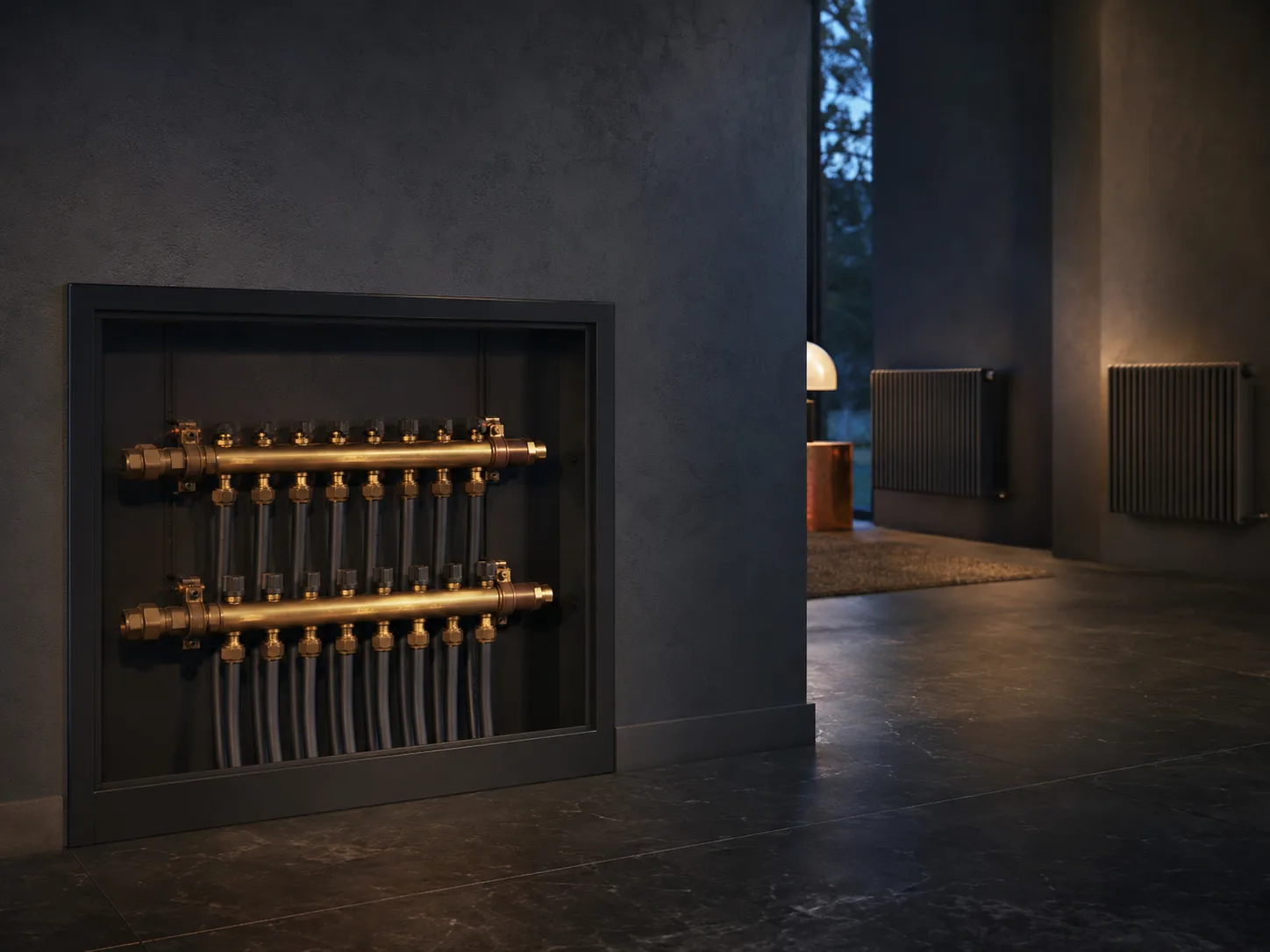
Loops go in exactly to the design and connect to labelled manifolds, zone by zone.
Circuits hold pressure right through the pour or overlay — so no fault can hide.
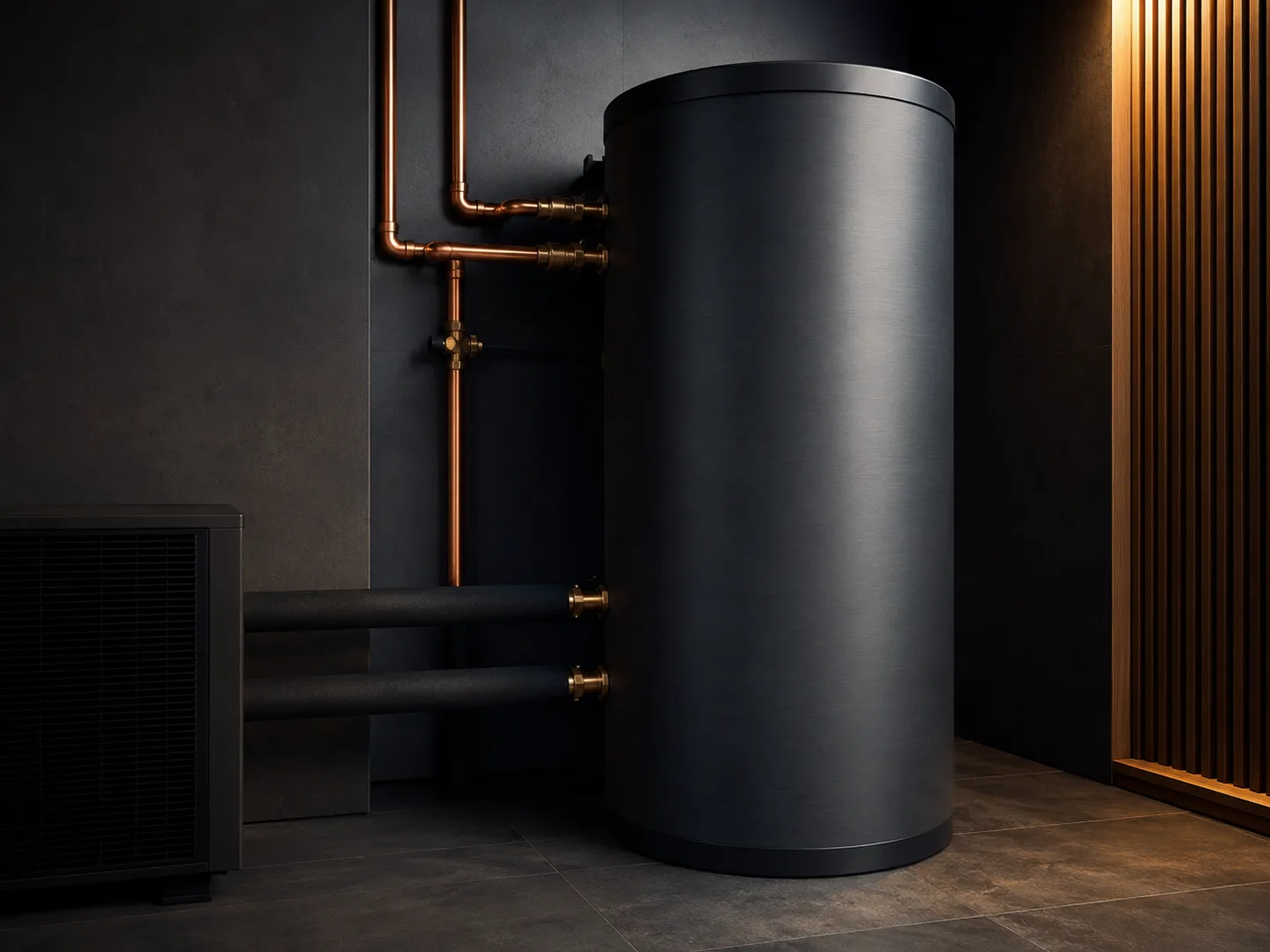
The aerotermia unit is connected, flows balanced, curve set and controls explained.
Big tiled floors, open plans and owners who go barefoot ten months a year — the north-west villa belt could have been designed for this system. Six settings where it pays off most.
Detached homes in l'Eliana and La Cañada with the floor area that lets the system stretch out.
The cheapest moment to install screed suelo radiante is before the first floor tile exists.
Low-profile retrofit panels bring warm floors to homes that were never built for them.
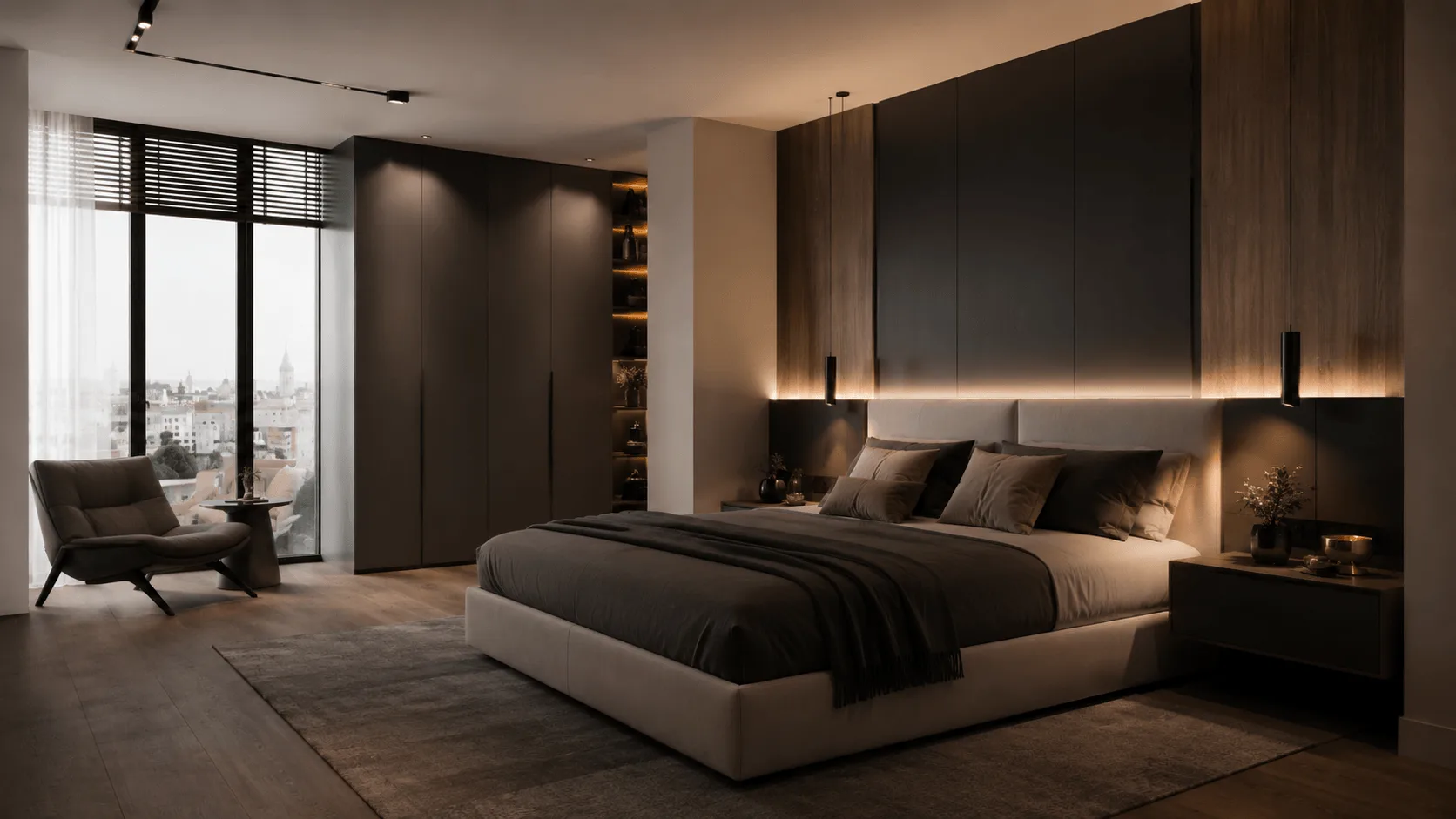
Silent, even warmth and clean walls — no ticking radiator under the window.
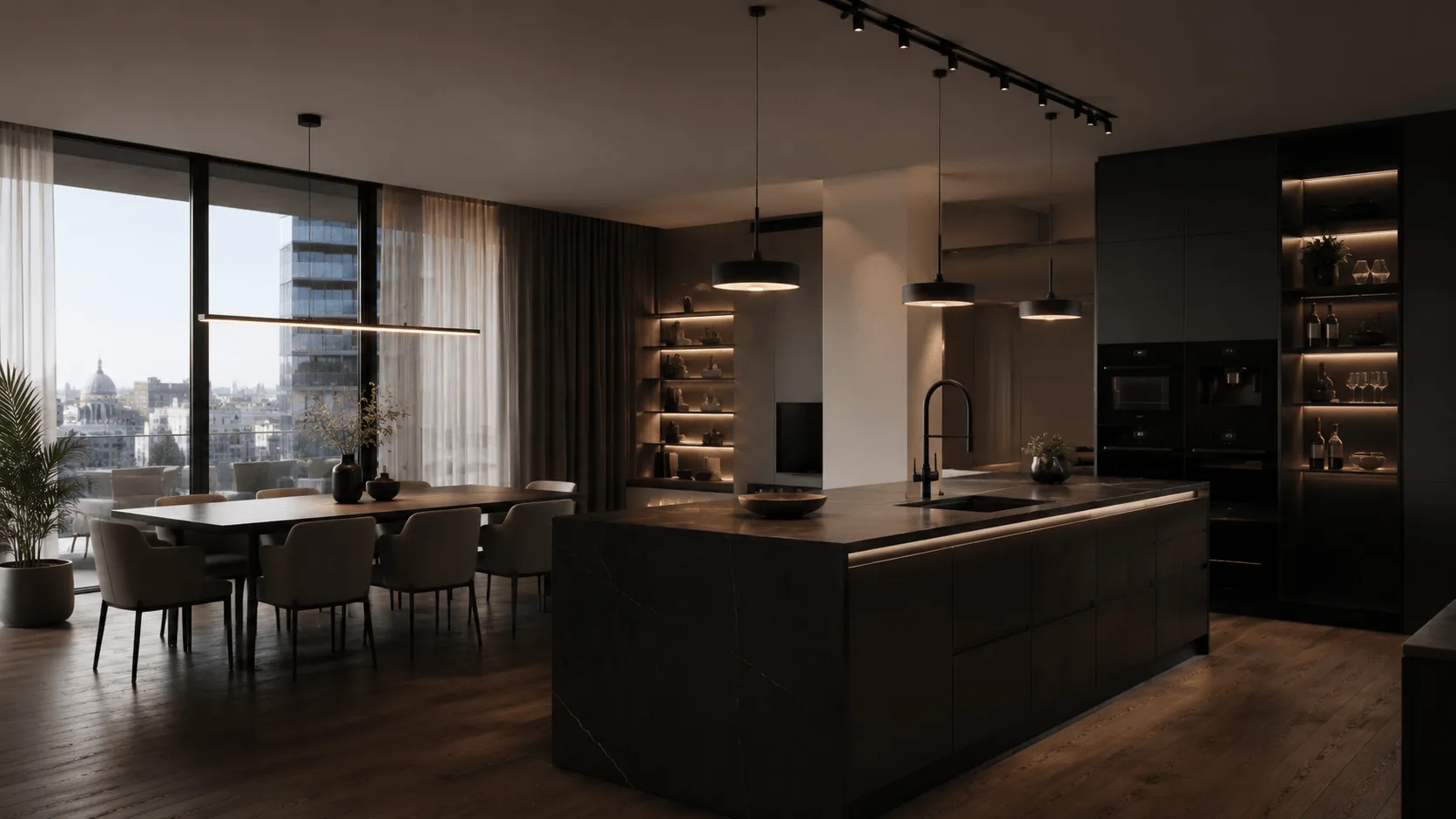
One zoned floor heats the space no radiator layout could ever cover evenly.
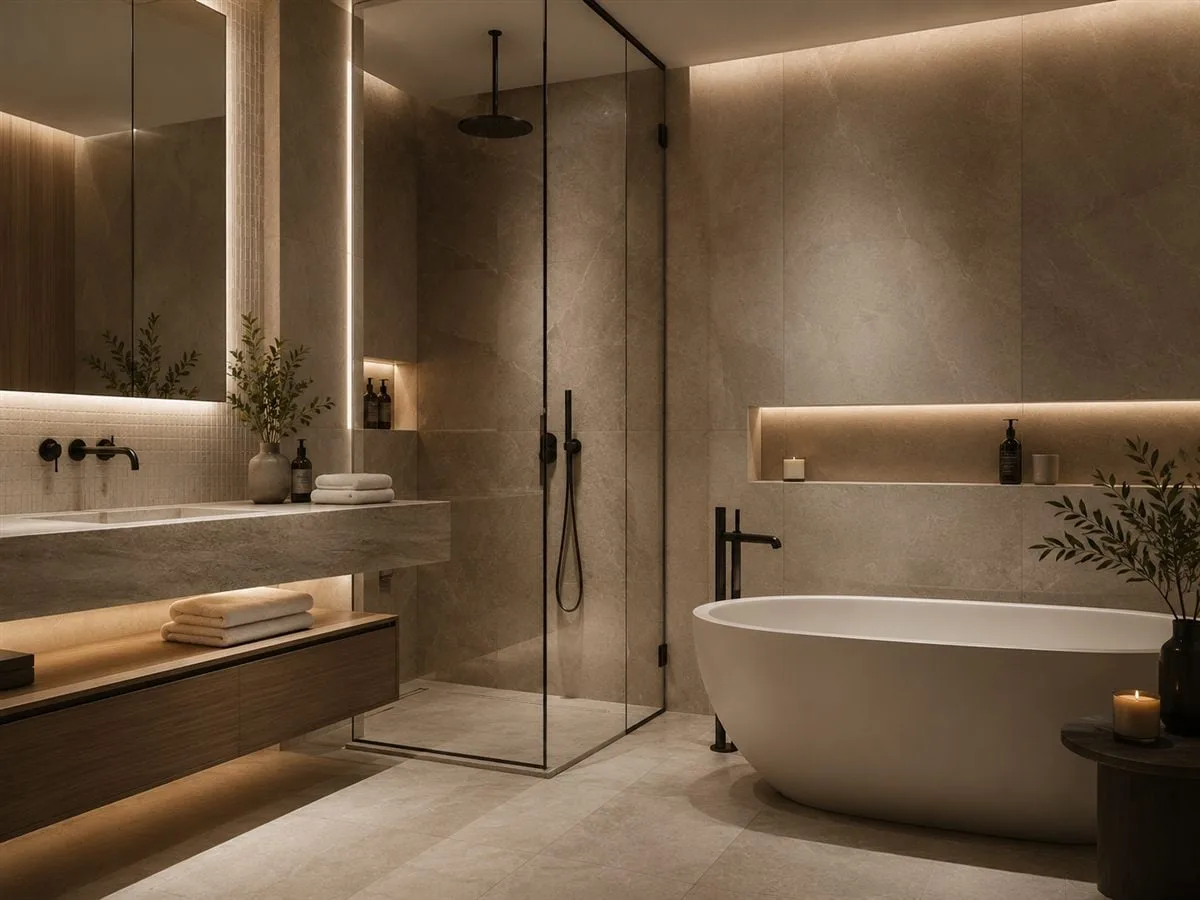
Warm tiles underfoot on a January morning — the upgrade nobody ever regrets.
Every heat pump has the same preference: the cooler the water it must produce, the less electricity it burns. Radiators typically ask for genuinely hot water; a large radiating floor is content with water that's merely warm, because it has an entire room's worth of surface to release the heat from. Pair the two and the aerotermia unit spends the winter loafing in its most efficient range — comfort goes up, consumption goes down, and the system barely makes a sound doing it.
Suelo radiante is buried work — you'll never see it again after the screed goes down. That's exactly why the surveying, the testing and the documentation matter more here than in any other job we do.
Aerotermia Underfloor
Heating in Valencia
Flip the system in June and the floor starts sipping heat out of the rooms instead of releasing it. Done properly, refrescante cooling is remarkably pleasant — no draughts, no noise, no cold spot under an AC vent. The craft lies in condensation control: humidity sensors keep the water above the dew point so the tiles stay dry, and on Valencia's stickiest August afternoons a fan coil or two handles the humidity the floor can't. We design the summer strategy together with the winter one, not as an afterthought.
Suelo radiante rarely travels alone — these are its usual companions in the villa projects we install.
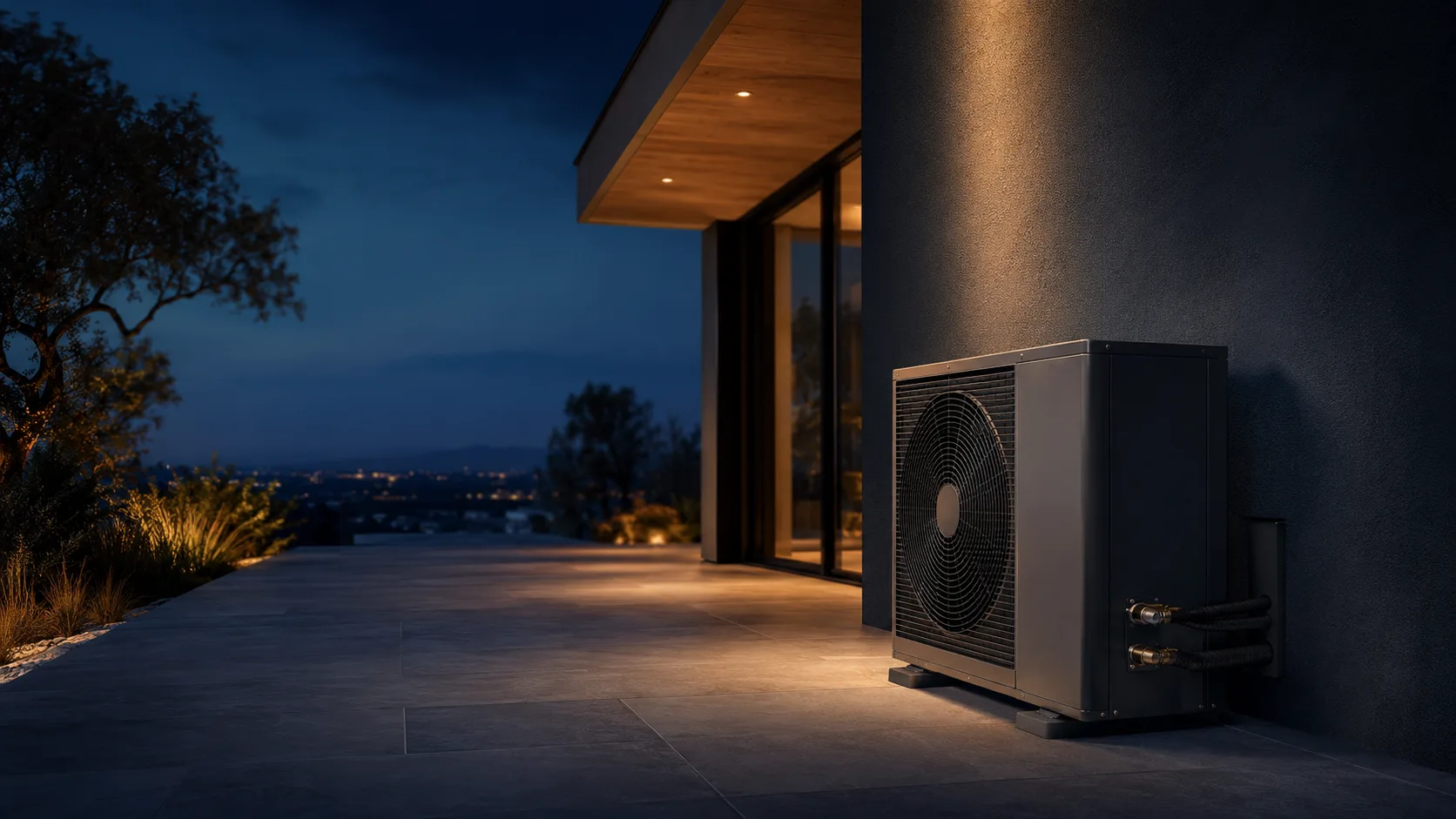
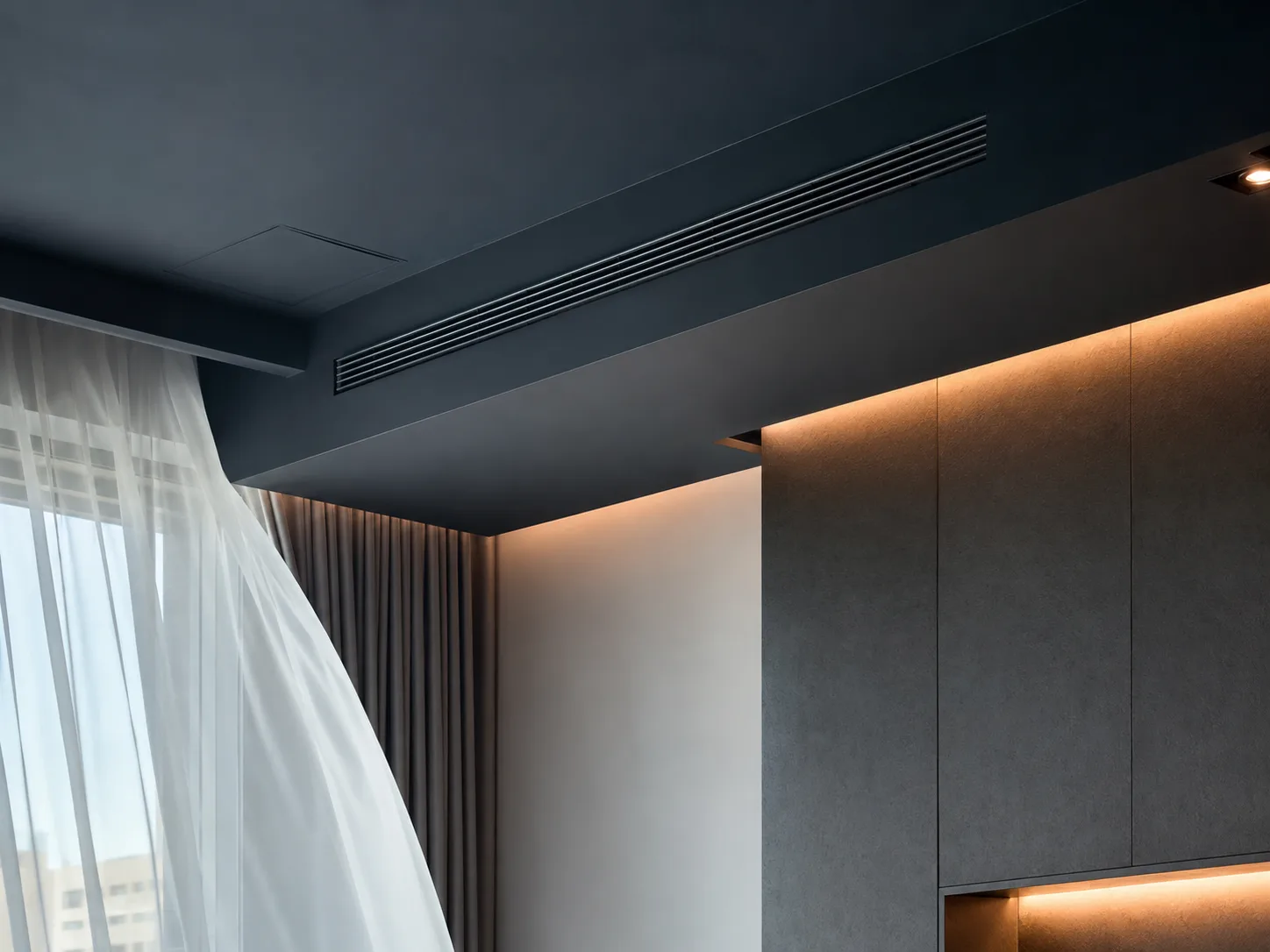
Aerotermia frío calor: one unit covering January mornings and August afternoons.
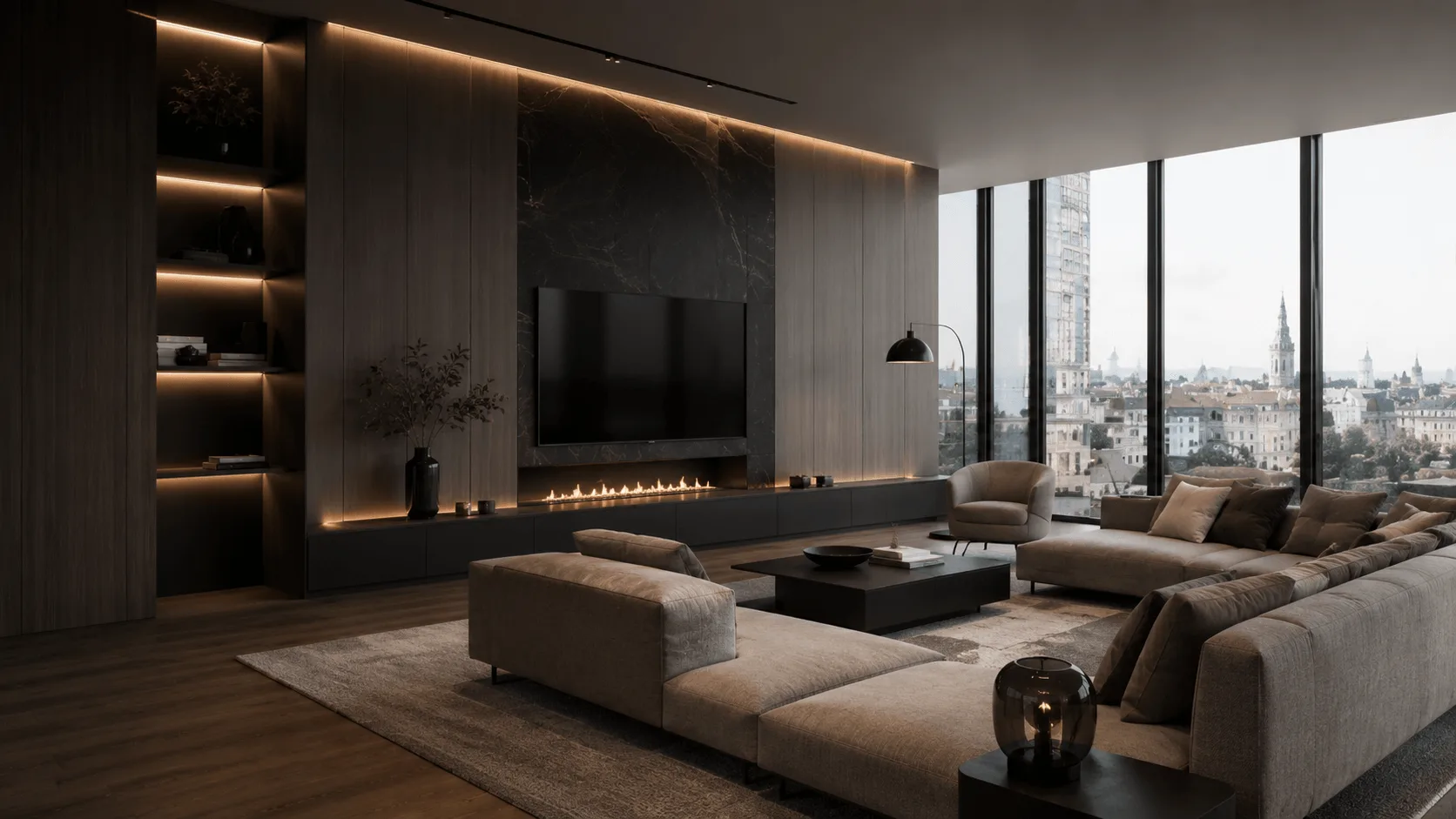
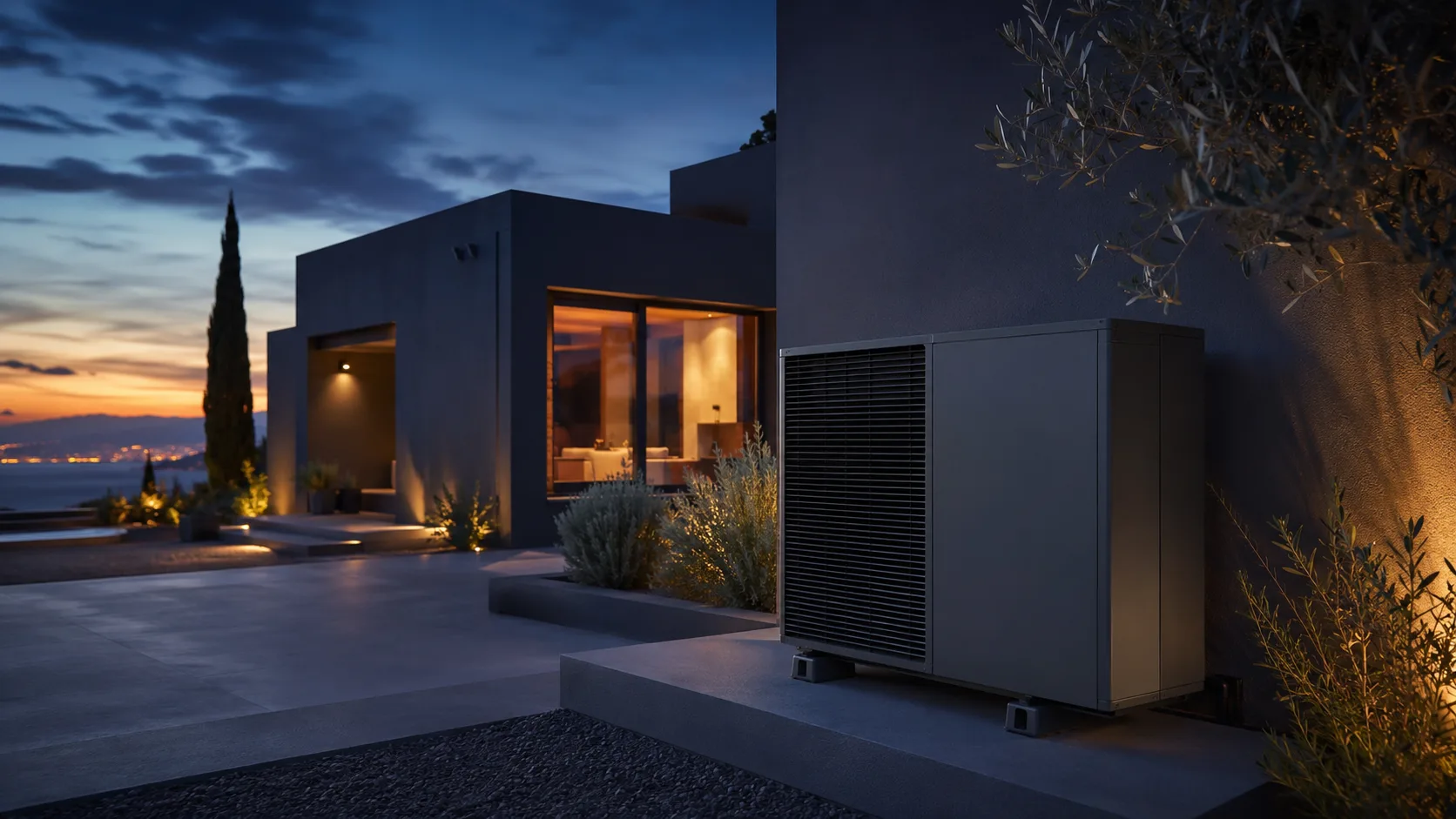
Aerotermia planned into obra nueva from the first drawing — the ideal scenario.
Run your warm floors on your own sunshine — aerotermia with fotovoltaica.
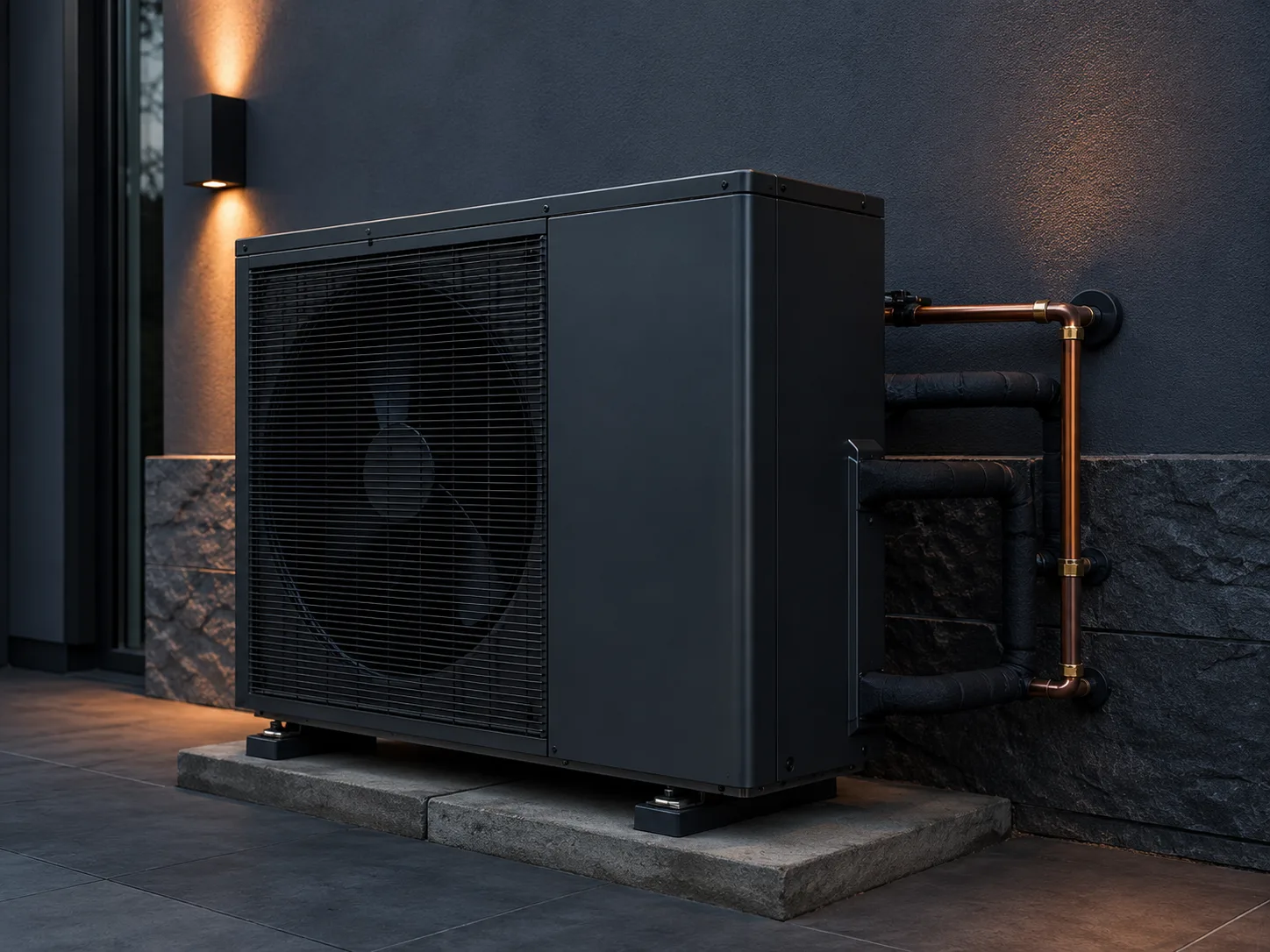
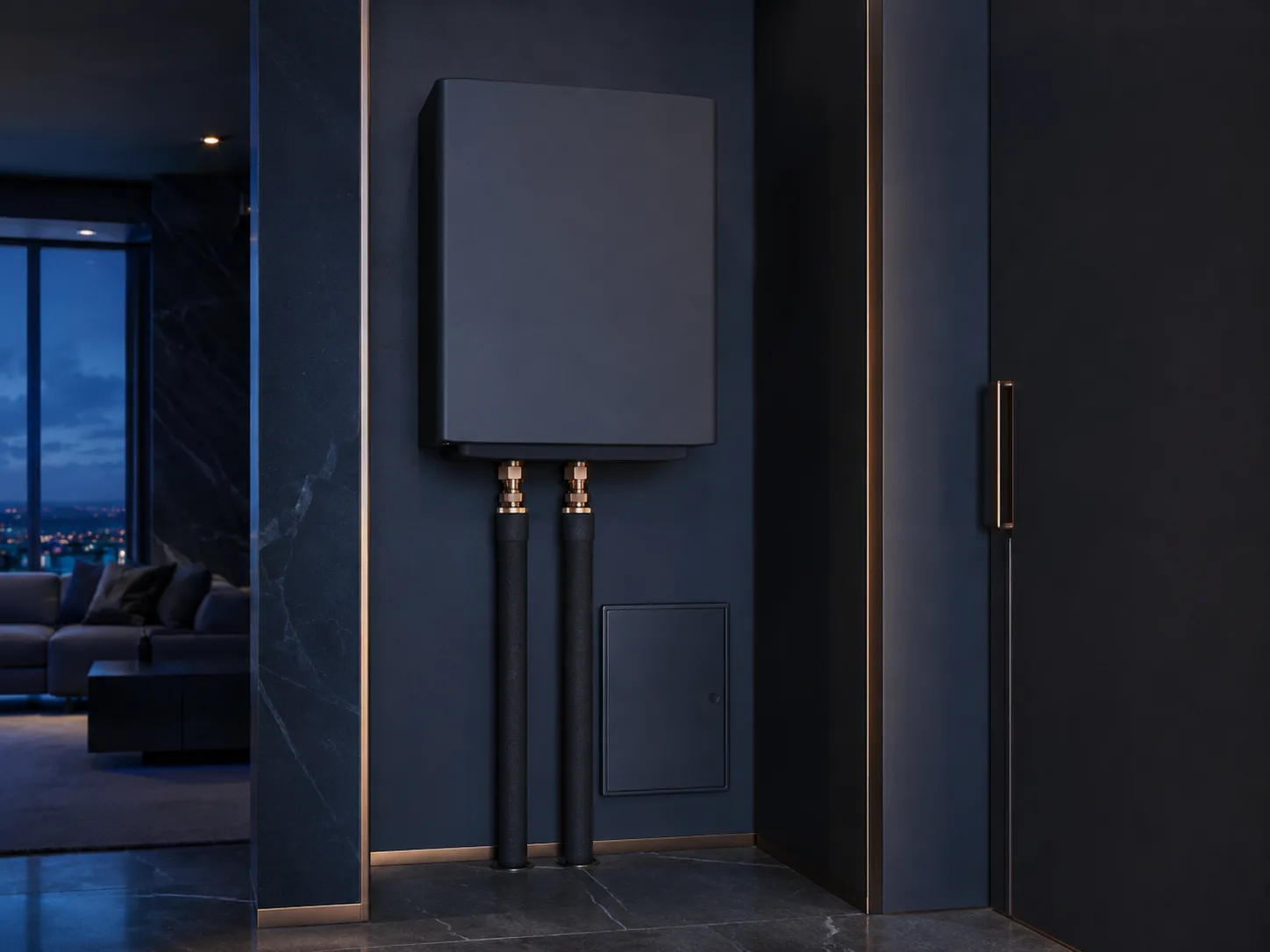
Monobloc or split hydronic — the machine behind the warm floor, explained.
Aerotermia con suelo radiante — and its summer twin, suelo radiante refrescante — is the combination we install more than any other in the villa towns north-west of Valencia. Whether you typed your search in Spanish or English, you'll get the same engineering, a fixed written quote, and installers who can brief your builder, your architect and your family without a translator in the room.
Two villas with identical floor area can price very differently once the build-up, the zoning and the finishes are on the table. These are the factors we measure on survey day — and your fixed written quote shows how each one played out for your home.
Most of our underfloor projects sit in the arc of villa towns north-west of the city: the pine-shaded plots of l'Eliana and La Cañada, where gardens and pools come almost as standard, and the growing family neighbourhoods of La Pobla de Vallbona and San Antonio de Benagéber. Bétera and Riba-roja de Túria bring a steady flow of new builds and deep renovations — the ideal moment for a screed system — while quieter hillside homes in Náquera and Serra tend to suit low-profile retrofits. Llíria, Vilamarxant and Valencia city itself complete a patch our vans cross every week.
Local Insight
Practically every home here already has the perfect emitter installed: metres and metres of ceramic tile, chosen generations ago precisely because it stays cool in summer. The same conductivity that chills bare feet in January is what makes tile outstanding above a heated loop — it passes warmth into the room faster than wood or carpet ever could, and in refrescante mode it sheds heat just as willingly. So the suelo radiante conversation in Valencia is rarely about changing your floors to suit the heating; it's about finally giving the floors you already love a job in both seasons. And villa owners who add a pool circuit to the same heat pump often find the machine usefully busy eleven months of the year.
Read all reviews on Google Maps →
Highly recommended. A serious and trustworthy company with high-level professionals who really know what they're doing. The prices are reasonable and fair.
Excellent plumber! Completed the installation quickly, professionally and neatly. Arrived on time, did everything professionally, gave useful recommendations and explained everything clearly.
Hired this company for renovation — very satisfied. They stuck to the timeline, the team was polite and careful. Minor questions came up during work, but they solved them quickly without unnecessary disputes.
Yes. Alongside the classic screed system for new builds and deep renovations, there are low-profile retrofit panels that add only a few centimetres including the new floor finish. During the survey we measure your current build-up, check door thresholds and ceiling heights, and tell you honestly, room by room, which system fits.
Ceramic and porcelain tile are the champions — they conduct heat beautifully and dominate Valencian homes anyway. Engineered wood works well when it's rated for underfloor heating, and most modern vinyl and laminate ranges are fine too. Thick rugs and some solid woods insulate too much; we'll flag anything in your plans that would fight the system.
It can take a large share of the load. In refrescante mode the heat pump circulates cool water through the same loops and the floor quietly absorbs heat from the rooms — a gentle, draught-free kind of cooling. On the most humid August days many owners add a fan coil or two for extra punch and for dehumidification, and we design that combination from the start.
Not when it's controlled properly. Humidity sensors watch the dew point and the system keeps the water temperature above it, so the tiles never get cold enough for moisture to form. That control logic is part of our commissioning — it's the difference between a professional refrescante setup and a damp surprise.
Barely warm — and that's the design. Because the whole floor radiates, it only needs to run a few degrees above room temperature to keep the house comfortable, which is exactly the low-temperature work where a heat pump is most efficient. You notice the absence of cold, not a hot surface.
A retrofit with low-profile panels in a few rooms can be finished in under a week. A whole villa with a wet screed system takes longer, because the screed must cure before the floor finish goes down — we sequence it with your other trades and put the full timeline in the written quote so nothing surprises you.
A heat pump is at its most efficient when it makes gently warm water rather than very hot water — and gently warm water is all a big radiating floor needs. Radiators demand hotter water from the same machine, which costs efficiency. Pairing aerotermia with suelo radiante lets the system cruise in its sweet spot all winter, and that shows up directly on your electricity bill.
Tell us on WhatsApp what you're working with — new build, renovation or finished house — plus rough floor areas and the finish you're dreaming of. We'll outline screed and low-profile options with a realistic timeline, and book a free survey anywhere from l'Eliana to Llíria.